Ozempic Face Is Real: Why Your Weight Loss Is Aging You Faster (And How to Fix It)
(And What You Can Do to Reverse It)
You did everything right. You committed to Ozempic, Wegovy, or another GLP-1 medication. You watched the pounds melt away. You finally fit into clothes you hadn’t worn in years. Your blood sugar stabilized. Your doctor was thrilled.
But then you looked in the mirror—really looked—and something was wrong.
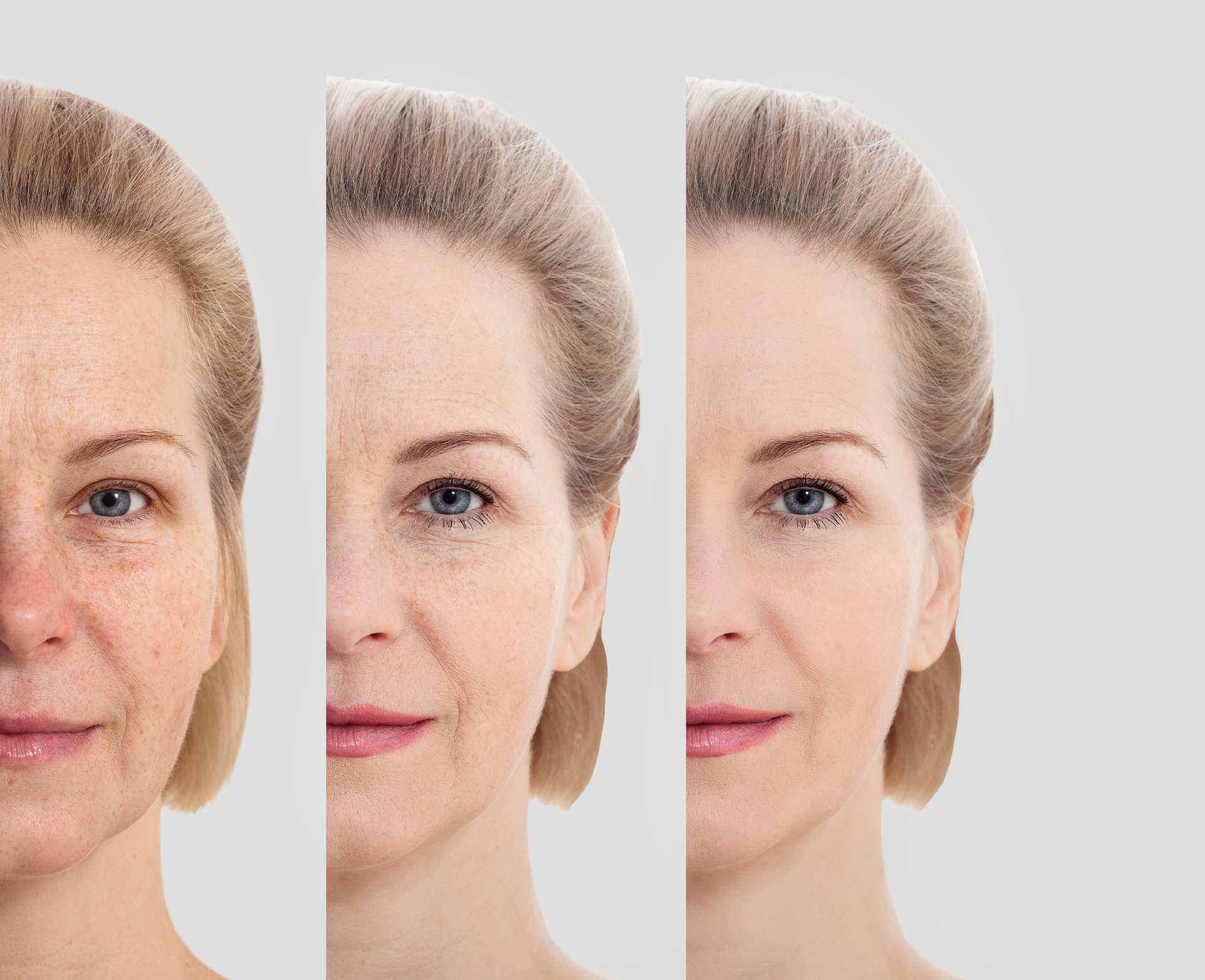
Your cheeks look hollow. Your skin seems to hang differently. The lines around your mouth are deeper. You look... older. Maybe even older than you did before you lost the weight.
Welcome to “Ozempic Face”—the side effect nobody warned you about. And you’re not imagining it.
The rapid weight loss caused by GLP-1 medications doesn’t just shrink your waistline. It depletes the natural fat pads that give your face its youthful volume, leaving behind sagging skin, hollow cheeks, and accelerated facial aging. Millions of patients are now discovering that their successful weight loss journey came with an unexpected cost: looking a decade older than their age.
But here’s the good news: Ozempic Face is treatable. And at Amado Clinics in Miami, we specialize in regenerative treatments that restore what rapid weight loss has taken away.
💡 Key Fact
Over 15 million Americans are now using GLP-1 medications like Ozempic, Wegovy, and Mounjaro. Dermatologists report a 300% increase in patients seeking facial rejuvenation specifically to address weight loss-related aging since 2023.
What Exactly Is “Ozempic Face”? Understanding the Problem
“Ozempic Face” isn’t a medical term—it’s a phenomenon that dermatologists and aesthetic medicine specialists have been seeing with alarming frequency since GLP-1 medications became mainstream weight loss treatments.
The term describes the gaunt, aged appearance that develops when patients lose significant weight rapidly. But what’s actually happening beneath the surface is far more complex than simple weight loss.
The Anatomy of Facial Aging from Rapid Weight Loss
Your face contains specialized fat compartments that serve a critical purpose: they provide the scaffolding that keeps your skin looking smooth, lifted, and youthful. These aren’t the same as the fat deposits around your waistline or thighs. Facial fat pads exist in precise locations—your cheeks, temples, under your eyes, and along your jawline—creating the natural contours we associate with youth and vitality.
When you lose weight gradually, your skin has time to adapt. Collagen production adjusts. Elastin fibers reorganize. The facial fat compartments deflate slowly, allowing surrounding tissues to compensate.
But GLP-1 medications don’t work gradually. Patients commonly lose 15-20% of their body weight in under a year—sometimes much faster. At this pace, your skin simply cannot keep up.
The Visible Signs of Ozempic Face
Patients experiencing Ozempic Face typically notice several distinct changes: hollowing in the cheeks and temples that creates a skeletal appearance, deepening of nasolabial folds (the lines from nose to mouth), jowling along the jawline as skin loses its underlying support, under-eye hollows that create a tired or aged look, loss of lip volume and definition, and an overall “deflated” appearance that paradoxically makes patients look older despite being healthier.
⚠️ Warning Sign
If you’ve lost more than 20 pounds on GLP-1 medications and notice your face looks increasingly gaunt, hollow, or aged, you’re likely experiencing Ozempic Face. These changes often become more pronounced 3-6 months after significant weight loss.
The Science Behind GLP-1 Weight Loss and Facial Aging
To understand why Ozempic Face happens, we need to understand how these medications work—and why they affect your face differently than traditional weight loss.
How GLP-1 Medications Trigger Rapid Fat Loss
GLP-1 receptor agonists like semaglutide (Ozempic, Wegovy) and tirzepatide (Mounjaro, Zepbound) work by mimicking a hormone called glucagon-like peptide-1. This hormone signals your brain that you’re full, dramatically reducing appetite and food intake.
The result is a significant caloric deficit that your body addresses by burning stored fat—everywhere. Unlike targeted exercise or certain diets that preferentially burn visceral fat, GLP-1 medications create systemic fat loss that doesn’t discriminate between the fat around your organs and the fat that gives your face its youthful structure.
Why Your Face Loses Volume First
Here’s something most patients don’t realize: facial fat is often among the first to go during rapid weight loss. This is because facial fat compartments have a rich blood supply and high metabolic activity, making them particularly responsive to the hormonal changes triggered by GLP-1 medications.
Studies show that patients losing weight on GLP-1 medications experience disproportionate facial volume loss compared to patients losing the same amount of weight through diet and exercise alone. The speed of weight loss appears to be the critical factor.
The Collagen Collapse Effect
Rapid weight loss doesn’t just remove facial fat—it also disrupts collagen and elastin production. When fat compartments deflate quickly, the overlying skin loses its structural support. Without adequate time to remodel, collagen fibers become disorganized and skin elasticity diminishes.
This creates a double problem: you’ve lost the volume that gave your face its shape, AND your skin has lost its ability to snap back. The result is sagging, wrinkling, and an aged appearance that goes far beyond what the number on the scale would suggest.
📊 Research Highlight
A 2024 study in the Journal of the American Academy of Dermatology found that patients who lost more than 10% of body weight on GLP-1 medications showed measurable decreases in facial fat volume within 4-6 months, with corresponding increases in perceived facial age of 3-5 years.
Reversing Ozempic Face: Regenerative Solutions That Actually Work
The good news is that Ozempic Face isn’t permanent. With the right approach, you can restore facial volume, rebuild collagen, and reclaim the youthful appearance that rapid weight loss has compromised.
At Amado Clinics, we take a regenerative medicine approach to Ozempic Face—focusing not just on filling lost volume, but on stimulating your body’s own repair mechanisms for lasting, natural-looking results.
1. Ozone Therapy for Cellular Regeneration
Before addressing visible facial changes, we focus on optimizing your body’s regenerative capacity at the cellular level. Ozone therapy increases oxygen delivery to tissues, stimulates collagen production, and activates your body’s antioxidant systems.
For Ozempic Face patients, ozone therapy creates the optimal internal environment for tissue repair. Improved cellular oxygenation means better collagen synthesis, faster healing from aesthetic treatments, and more robust, longer-lasting results from any rejuvenation procedure.
2. PRP (Platelet-Rich Plasma) Facial Rejuvenation
PRP therapy harnesses your body’s own growth factors to stimulate tissue regeneration. We draw a small amount of your blood, concentrate the platelets containing powerful growth factors, and inject them into areas of volume loss and skin laxity.
For Ozempic Face, PRP is particularly effective because it addresses both volume loss and skin quality. Growth factors stimulate new collagen production, improve skin texture and elasticity, and help restore the natural facial contours that rapid weight loss has depleted.
3. Biostimulatory Treatments
Unlike traditional dermal fillers that simply add volume, biostimulators work by triggering your body’s own collagen production. Treatments using poly-L-lactic acid or calcium hydroxylapatite create a scaffold that stimulates gradual, natural-looking volume restoration over several months.
This approach is ideal for Ozempic Face because it rebuilds facial structure from within, creating results that look natural and last longer than traditional fillers. The gradual improvement also allows your skin to adapt, avoiding the “overfilled” look that can occur with aggressive filler use.
4. Combination Protocols for Comprehensive Restoration
The most effective approach to Ozempic Face combines multiple modalities tailored to your specific needs. A typical protocol at Amado Clinics might include ozone therapy to optimize cellular function, followed by PRP to stimulate regeneration, with biostimulatory treatments to rebuild lost volume.
This layered approach addresses Ozempic Face at every level: cellular health, tissue regeneration, and structural support. The result is comprehensive facial rejuvenation that looks natural and supports long-term skin health.
The Amado Clinics Approach: Regeneration, Not Just Restoration
At Amado Clinics, we’ve seen a significant increase in patients seeking help for GLP-1-related facial changes. What we’ve learned is that Ozempic Face requires a fundamentally different approach than traditional facial aging.
Traditional aesthetic medicine often focuses on filling wrinkles and adding volume with synthetic materials. But for patients who’ve experienced rapid weight loss, this approach frequently produces unsatisfactory results. The underlying problem isn’t just missing volume—it’s compromised tissue quality, depleted collagen, and skin that’s lost its regenerative capacity.
Our regenerative medicine approach addresses these root causes. We don’t just fill what’s missing—we help your body rebuild what it’s lost. Ozone therapy optimizes cellular function. PRP activates your natural repair mechanisms. Biostimulatory treatments trigger collagen production that continues long after your appointment.
The result is facial rejuvenation that looks natural, improves over time, and supports your overall health—not just your appearance.
💬 Patient Perspective
"I lost 45 pounds on Wegovy and was thrilled with my body, but devastated by what happened to my face. I looked exhausted and years older. After three months of treatment at Amado Clinics, including ozone therapy and PRP, my face finally matches how I feel inside—healthy and vibrant." — Jennifer M., Doral
What To Do Now: Your Path to Facial Restoration
If you’re experiencing Ozempic Face, the most important thing to understand is this: waiting will not make it better. Without intervention, the collagen loss and skin laxity caused by rapid weight loss will continue to progress.
But with the right treatment approach, significant improvement is absolutely possible. Here’s how to get started:
Step 1: Schedule a comprehensive consultation at Amado Clinics. We’ll evaluate your specific patterns of volume loss, assess your skin quality, and understand your aesthetic goals.
Step 2: Receive your personalized treatment plan. Based on your evaluation, we’ll recommend the optimal combination of regenerative therapies to address your unique presentation of Ozempic Face.
Step 3: Begin your regenerative journey. Most patients see initial improvements within 4-6 weeks, with continued enhancement over the following months as collagen production increases.
Step 4: Maintain your results. We’ll create a long-term maintenance protocol that supports your continued use of GLP-1 medications while preserving your facial rejuvenation.
You worked hard to achieve your weight loss goals. You deserve to enjoy your healthier body without sacrificing your youthful appearance. Ozempic Face is a solvable problem—and we’re here to help.
Frequently Asked Questions About Ozempic Face
Q: Is Ozempic Face permanent?
A: No, Ozempic Face is not permanent. However, without treatment, the facial volume loss and skin laxity will not resolve on their own. The lost facial fat will not return naturally, even if you regain weight (which typically redistributes to different areas). Regenerative treatments can restore facial volume and stimulate collagen production to reverse the aged appearance.
Q: Can I prevent Ozempic Face while still taking GLP-1 medications?
A: While you can’t completely prevent facial volume loss during significant weight loss, you can minimize its impact. Slower weight loss is gentler on facial tissues, so discuss dosing with your prescribing physician. Starting regenerative treatments like ozone therapy and PRP early can support skin health during weight loss. Adequate protein intake and hydration also help preserve muscle and skin quality.
Q: How is treating Ozempic Face different from regular anti-aging treatments?
A: Ozempic Face involves rapid, significant volume loss combined with compromised skin quality—a different pattern than gradual aging. Treatment requires rebuilding facial structure while simultaneously improving skin’s regenerative capacity. That’s why we emphasize regenerative approaches like ozone therapy and PRP rather than simply adding fillers, which may not produce natural results in depleted tissue.
Q: How long does it take to see results from Ozempic Face treatment?
A: Initial improvements are typically visible within 4-6 weeks of beginning treatment. However, the full regenerative effects of treatments like PRP and biostimulators develop over 3-6 months as new collagen forms and tissue quality improves. Most patients undergo a series of treatments spaced several weeks apart for optimal results.
Q: Will I need to stop taking Ozempic or Wegovy to treat Ozempic Face?
A: No, you do not need to stop your GLP-1 medication to treat Ozempic Face. Our regenerative treatments work alongside your weight loss program. In fact, treating facial changes early—while you’re still losing weight—can prevent more severe volume loss. We’ll create a treatment plan that supports both your weight loss goals and your facial rejuvenation.
Ready to Restore What Weight Loss Took Away?
You achieved something incredible with your weight loss journey. Don’t let Ozempic Face diminish your success. At Amado Clinics, we help GLP-1 patients restore their youthful facial appearance through regenerative medicine that works with your body, not against it.
✨ Schedule Your Ozempic Face Consultation Today ✨
Amado Clinics | Miami & Doral Locations
Regenerative solutions for GLP-1 patients who want to look as good as they feel.
──────────────────────────────────────
AMADO CLINICS
Aesthetic & Regenerative Medicine
Miami | Doral
